
Puzzles for Seniors: Cognitive Benefits & Printables
What research really says about puzzles and brain health in older adults, the best puzzle types for seniors, and free large-print printables.
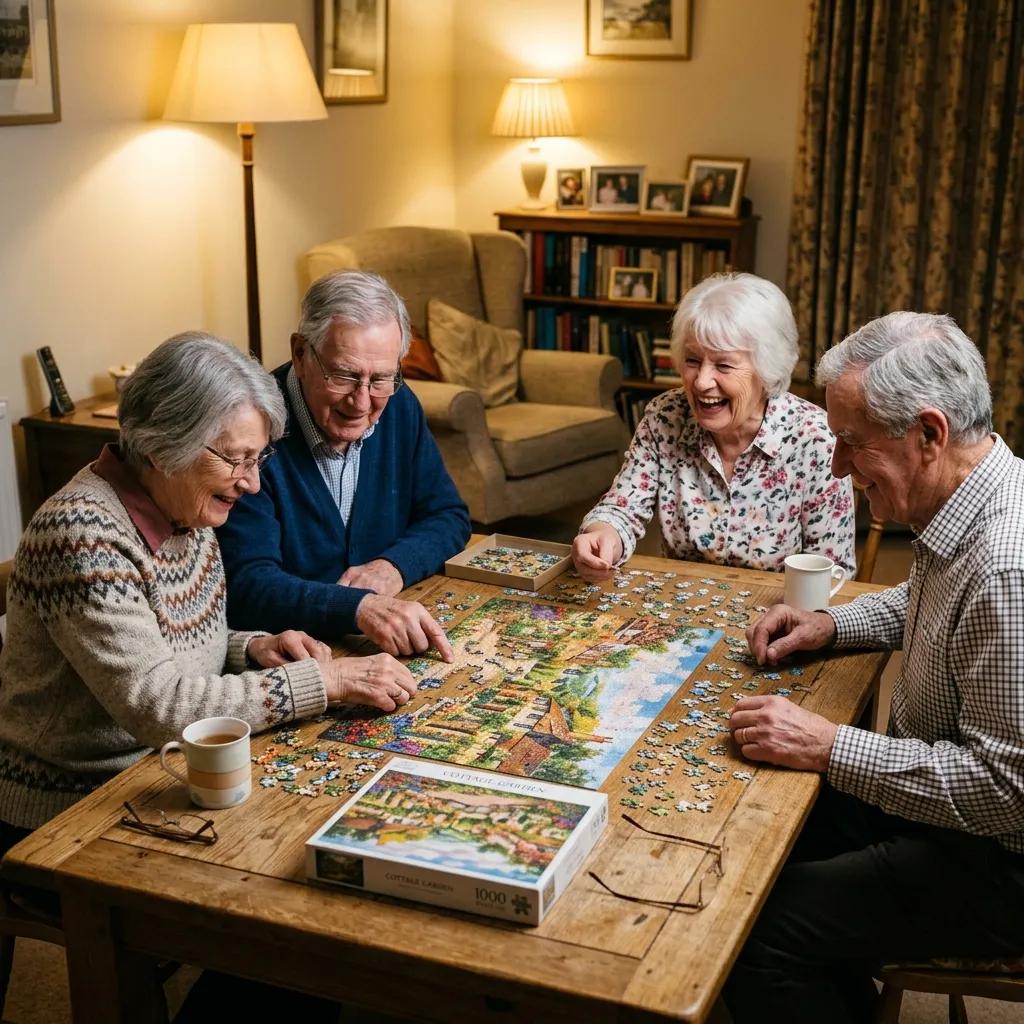
Why Puzzles Matter for Cognitive Health in Seniors
As we age, keeping our minds sharp becomes increasingly important. In the PROTECT study of more than 19,000 adults aged 50 to 93, researchers from the University of Exeter and King's College London found that people who did word puzzles and number puzzles more often tended to score better on tests of attention, reasoning, and memory (Brooker et al., 2019a; Brooker et al., 2019b). In the University of Exeter's summary of the findings, people who did word puzzles performed at a level equivalent to about ten years younger than their age on tests of grammatical reasoning and about eight years younger on tests of short-term memory.
Keep in mind what that study can and can't tell us: it compared people at a single point in time, so it shows an association, not proof that puzzles caused the sharper scores. Even so, puzzles are an enjoyable form of mental exercise. Whether it's a morning sudoku with coffee, an afternoon crossword, or a relaxing word search before bed, these activities give your attention, memory, and reasoning a regular workout.
Can puzzles prevent dementia? That hasn't been proven. The UK's Alzheimer's Society notes that people who push themselves mentally throughout their lives appear to have lower rates of dementia, but that there is no strong evidence that brain training activities reduce a person's risk of developing it. So think of puzzles as a rewarding daily habit rather than a medical treatment. Let's look at what the research does and doesn't show, and how you can incorporate puzzles into a healthy daily routine.
Benefits of Puzzles for Older Adults
1. Memory Workout
Puzzles require both short-term and long-term memory engagement. When solving a crossword, you must remember clues while searching for answers. Sudoku demands holding multiple number possibilities in working memory. Every puzzle gives these memory skills a regular workout.
2. Puzzles and Cognitive Decline: What Studies Show
The often-quoted figure of about 2.5 years comes from the Bronx Aging Study. Among 101 older adults who went on to develop dementia, those who did crossword puzzles showed the onset of accelerated memory decline about 2.5 years later than those who didn't (Pillai et al., 2011). This was an observational study: it did not show that puzzles prevent or delay dementia itself, and once memory decline began, it progressed faster in the puzzle solvers. The authors called for clinical trials to test whether puzzles actually help.
Researchers often explain findings like this with the idea of "cognitive reserve"—differences in how people's brains cope with age-related changes, which lifelong experiences such as education, work, and leisure activities may help build (Stern, 2012).
3. Mood and Sense of Accomplishment
Finishing a puzzle brings a small but real sense of accomplishment, and many people find puzzles a calming, absorbing way to spend time. Solving puzzles with family, friends, or a group at a senior center also adds social contact to the day.
4. Problem-Solving Practice
Regular puzzle-solving keeps analytical thinking engaged. Keep expectations realistic, though: a major review of brain-training research found extensive evidence that practice improves performance on the trained tasks themselves, but little evidence that it improves everyday cognitive performance (Simons et al., 2016). Enjoy puzzles for the challenge itself rather than as a guaranteed boost to everyday decision-making.
5. Fine Motor Coordination
Physical puzzles like jigsaws require hand-eye coordination and fine motor control. Writing answers in crosswords or penciling numbers in sudoku grids gives the hands regular practice with small, precise movements.
Best Puzzle Types for Seniors
Sudoku: Logic and Reasoning
Sudoku is excellent for logical thinking without requiring language skills or extensive knowledge. It's perfect for seniors who may be experiencing early memory issues, as the rules remain consistent and the challenge is purely logical.
- Easy level: Ideal for beginners or daily warm-up
- Medium level: Good for regular practice
- No vocabulary required: Great for non-native English speakers
Create large-print sudoku puzzles →
Word Search: Visual Scanning and Vocabulary
Word search puzzles combine visual scanning with word recognition. They're calming, low-pressure activities that still keep the mind engaged. Many seniors find them particularly relaxing for evening activities.
- Improves visual attention and scanning
- Reinforces vocabulary and spelling
- Can be themed to personal interests (gardening, travel, history)
Create custom word search puzzles →
Crossword Puzzles: Language and Memory
Crosswords are the gold standard for vocabulary and general knowledge. They draw on language skills and require retrieving information from long-term memory—excellent exercise for verbal skills.
- Strengthens vocabulary and word retrieval
- Encourages learning new information
- Social activity when solved with others
Create personalized crossword puzzles →
Jigsaw Puzzles: Spatial Reasoning
Physical jigsaw puzzles engage spatial reasoning, visual memory, and fine motor skills. In a study of 100 adults aged 50 and over, jigsaw puzzling skill was linked to all eight visuospatial abilities tested, from perception and mental rotation to working memory and reasoning; a 30-day puzzling program, however, did not measurably improve overall visuospatial cognition compared with a control group (Fissler et al., 2018). Jigsaws are also particularly valuable because they can be done collaboratively with family members or in group settings at senior centers.
- Excellent for visual-spatial processing
- Promotes social interaction
- Provides tangible sense of accomplishment
Looking for a bigger challenge? Our jigsaw puzzles for adults go up to 500+ pieces with detailed images and irregular shapes.
Large Print and Accessibility Tips
Making puzzles accessible for seniors is crucial. Here are key considerations:
- Large Print: Use puzzles with bold, clear fonts. Our generators allow you to print single puzzles per page for maximum readability.
- High Contrast: Black text on white backgrounds works best. Avoid colored or patterned backgrounds.
- Adequate Spacing: Grid cells should have enough room for writing. Cramped puzzles cause frustration.
- Appropriate Difficulty: Start with easier puzzles to build confidence, then gradually increase challenge.
- Answer Keys: Having solutions available reduces frustration and allows self-checking.
All our puzzle makers support downloading printable PDFs with answer keys—perfect for creating senior-friendly puzzles at home or in care facilities.
Daily Puzzle Routine for Cognitive Health
Consistency is key. Here's a recommended daily routine:
- Morning (15-20 minutes): Start with an easy sudoku to wake up the logical mind
- Afternoon (20-30 minutes): Try a crossword or word search—these are more relaxed and can accompany a cup of tea
- Evening (as desired): Work on a jigsaw puzzle—it's calming before bed and can span multiple days
Important: Puzzles should feel enjoyable, not stressful. If a puzzle becomes frustrating, switch to an easier one or take a break. The goal is regular engagement, not perfection.
Puzzles for Caregivers and Senior Care Facilities
If you're caring for an elderly family member or working in a senior care facility, puzzles make valuable everyday activities:
- Create personalized puzzles: Use family names, favorite places, or meaningful vocabulary in word searches and crosswords
- Adapt to abilities: Match puzzle difficulty to the individual's current cognitive level
- Make it social: Solve puzzles together as a bonding activity
- Rotate puzzle types: Different puzzles exercise different cognitive skills
- Celebrate completion: Acknowledge accomplishments to boost confidence and motivation
For occupational therapists and activity directors, our free puzzle generators allow you to create unlimited custom puzzles tailored to your residents' interests and abilities.
Get Free Printable Puzzles for Seniors
Ready to start exercising your brain? Our free puzzle makers are designed with seniors in mind:
- ✓ No registration required—start creating immediately
- ✓ Large-print friendly PDF downloads
- ✓ Answer keys included with every puzzle
- ✓ Multiple difficulty levels
- ✓ 100% free, unlimited puzzles
Choose your puzzle type and start your brain-healthy journey today:
- Sudoku Puzzle Maker — Logic and reasoning exercises
- Word Search Maker — Visual scanning and vocabulary
- Crossword Puzzle Maker — Language and memory workout
- Jigsaw Puzzle Maker — Spatial reasoning and fine motor skills
Learn more about sudoku strategies in our Sudoku Solving Strategies Guide, or explore Sudoku for Kids if you want puzzles for the grandchildren too!